

Food processor vs blender: which one do you actually need?
Decide whether your kitchen needs a food processor, blender, hand blender, smoothie maker or juicer by matching each appliance to the prep jobs you actually do.
In this article
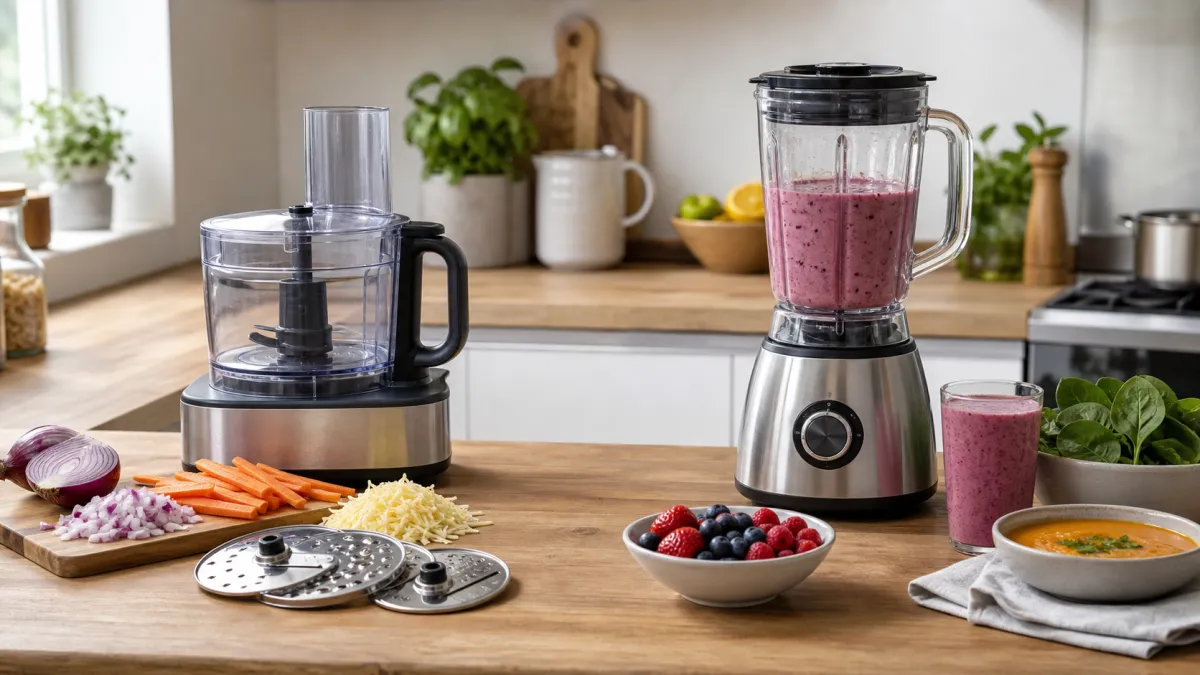
If you are choosing one prep appliance, start with the texture you want at the end. A food processor is the better buy when your problem is chopping, slicing, grating, kneading or turning firm ingredients into a controlled texture. A blender is the better buy when your problem is liquid movement: smoothies, soups, sauces, frozen drinks and anything that needs to become properly smooth.
The awkward part is that the two appliances overlap just enough to cause bad purchases. A blender can chop a few ingredients badly if you pulse carefully. A food processor can puree some things if they are wet enough. Neither compromise is the reason to buy one. The right choice is the machine that handles your normal weekly jobs without making you fight the design.
The quickest way to choose
| Your normal job | Best first buy | Why |
|---|---|---|
| Chopping onions, carrots, herbs or nuts | Food processor | The wide bowl and pulse control make it easier to stop at chopped rather than liquefied. |
| Slicing vegetables or grating cheese | Food processor | Processor discs do repetitive knife and grater work that a blender is not designed to do. |
| Smoothies, shakes and frozen fruit drinks | Blender or smoothie maker | A tall jar pulls liquid and fruit through the blades for a smoother, drinkable finish. |
| Soup, sauce, puree or dressing | Blender or hand blender | Blenders are better at moving liquid around the jar or pan until it becomes smooth. |
| Hummus, pesto, nut butter or thick dips | Food processor | Thicker mixtures are easier to scrape, pulse and control in a wider processor bowl. |
| Daily juice | Juicer | A juicer separates liquid from pulp; a blender keeps the whole mixture together. |
| One small appliance for occasional cooking | Hand blender | It will not slice or grate, but it covers soups, sauces and small blending jobs with little storage space. |
Compare the right type of appliance
Know which one sounds right for your kitchen? Jump to our buying guides and compare the models worth shortlisting.
Buy a food processor if prep work is what slows you down
A food processor is the more useful appliance for people who cook meals from ingredients. It is built around a wide bowl, a central blade and, on many models, separate discs for slicing and shredding. That makes it good at the jobs you would otherwise do with a knife, box grater or pastry cutter.
Choose a food processor first if you regularly make slaws, chopped salads, grated cheese, breadcrumbs, pastry, dough, curry pastes, falafel mix, burger mixtures, hummus or batch-prepped vegetables. The key benefit is control, not just speed. You can pulse in short bursts, stop while there is still texture, scrape the bowl and carry on.
The trade-off is storage and washing up. A full-size processor is usually wider than a blender, often comes with extra discs, and can feel like too much machine for a single sauce or one breakfast drink. It is also not the natural home for liquid-heavy recipes. Fill a processor bowl with soup or smoothie mix and you are more likely to hit max-fill limits, leaks or an uneven finish.
For most kitchens, a food processor earns its space when you already know you dislike repetitive chopping and grating. If you only want a machine for drinks, it is the wrong place to spend the money.
Buy a blender if smooth liquid results matter most
A jug blender is designed to pull ingredients down into a moving liquid vortex. That shape is why it is better for smoothies, milkshakes, frozen fruit, smooth soups, pancake batter, dressings, sauces and purees that should pour cleanly. A good blender makes the result smoother than a processor can usually manage, especially when there is enough liquid in the jar.
Choose a blender first if your weekly routine includes breakfast smoothies, protein shakes, soup lunches, frozen fruit drinks, nut milks or silky sauces. A blender also makes more sense if you want to pour straight from the jar rather than scrape a wide bowl.
The limitation is solid prep. A blender jar is narrow, the blades are fixed at the bottom, and ingredients need movement to reach them. That is useful for liquids but frustrating for dry chopping. Onion, herbs, nuts and breadcrumbs can go from untouched to paste in seconds, and you will often need to stop, shake or scrape the jar. A blender also cannot slice cucumber, grate cheese or shred carrots.
If you mainly cook savoury meals and want one appliance to replace hand prep, a blender will feel impressive for the wrong jobs and inadequate for the right ones.
Where hand blenders, smoothie makers and juicers fit
The food processor-versus-blender choice gets clearer once you separate the smaller specialist appliances.
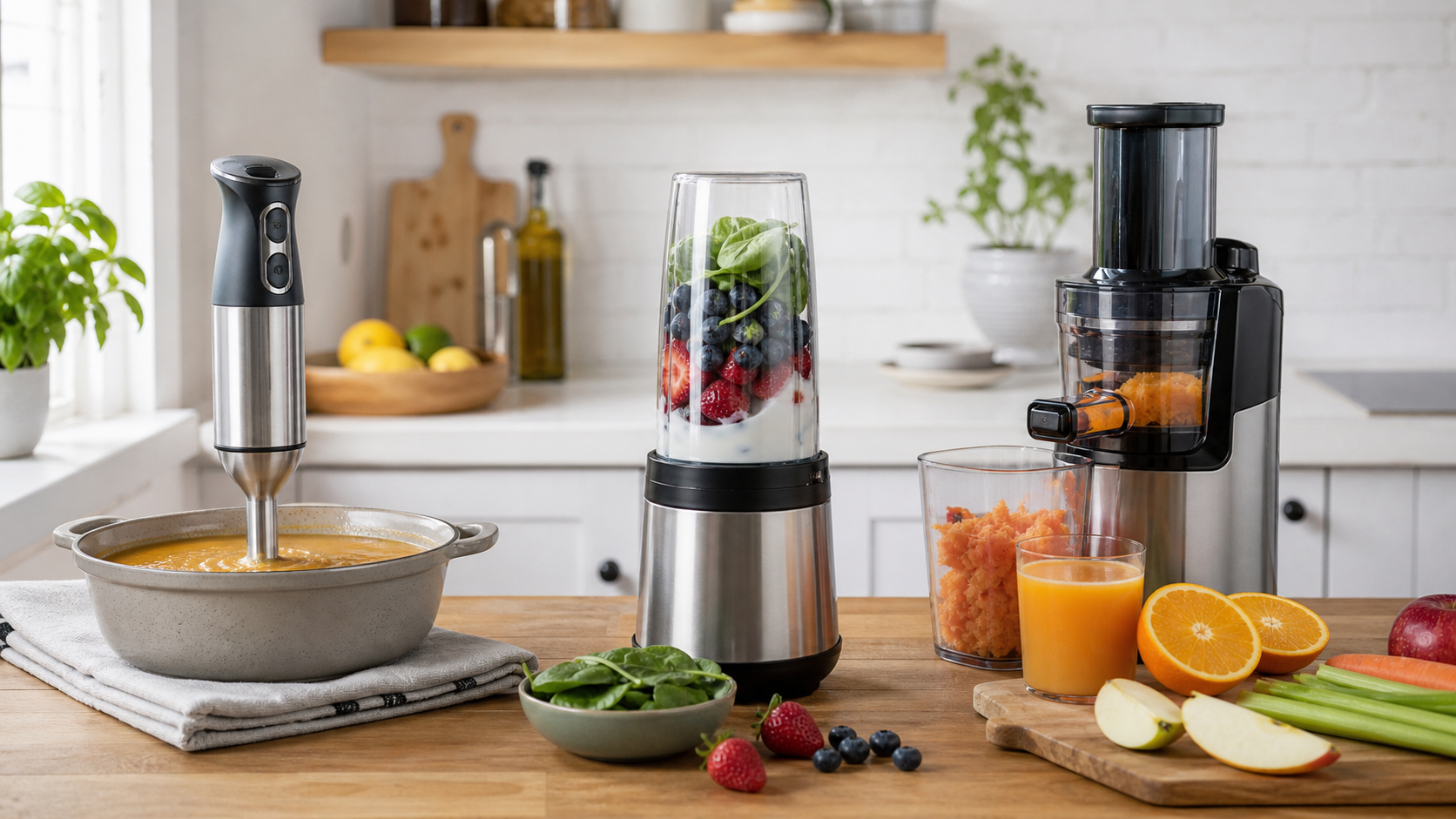 Hand blenders, smoothie makers and juicers solve narrower jobs than a full food processor or jug blender.
Hand blenders are the small-kitchen compromise
A hand blender is best for people who make soup, sauces, mayonnaise, baby food or small batches and do not want a large appliance on the worktop. It blends in a pan, jug or beaker, so it is quick to store and quick to rinse. It will not slice, grate or knead, and it usually will not give the same frozen-drink performance as a powerful jug blender, but it is the easiest format to justify in a tight kitchen.
Smoothie makers are for drinks, not general prep
A smoothie maker or personal blender is a narrower version of the blender decision. It suits people who mostly want single-serve drinks, often in a cup they can take with them. It is usually easier to store than a large jug blender, but it gives up capacity and flexibility. If you want soup for several portions or sauces for cooking, a full jug blender is less cramped.
Juicers are a separate habit
A juicer is not a blender substitute. It extracts liquid and leaves pulp behind, which is exactly the point if you want clear juice. If you want thick smoothies, blended fruit, soup or sauce, a blender is the better machine. If you want daily juice and are happy with the cleaning routine, look at juicers separately.
It is also worth being realistic about health expectations. Juice and smoothies can be useful, but they are not a free pass to drink unlimited fruit. If that is the main reason you are buying, check portion guidance as well as appliance reviews.
The three-question test before you buy
- What do you want more often: texture control or smoothness? Texture control points to a food processor. Smoothness points to a blender.
- Are you replacing knife work or drink prep? Knife, grater and dough jobs point to a processor. Drinks, soups and sauces point to a blender.
- Will you leave it accessible? The best appliance is the one you can use without excavating a cupboard. If storage is tight, a hand blender or compact processor may beat a more capable machine that never comes out.
What about all-in-one systems?
Multi-function bases, processor attachments and blender-processor sets can be sensible if you genuinely need both formats and want to avoid two motors. Check the compromise before you buy. The processor bowl may be smaller than a dedicated food processor, the blender jar may be less powerful than a specialist jug blender, and the accessories still need storage.
They make most sense when your cooking is mixed: weekday smoothies, weekend batch prep, occasional grating and the odd soup. They make less sense if you already know one job dominates. A keen smoothie drinker is usually better served by the best blender they can justify. A batch cook who chops vegetables and makes dough every week should prioritise a capable food processor.
Verdict: most cooks should choose by habit, not by versatility
If you cook from scratch and the slow part is prep, buy a food processor first. It will save time on chopping, slicing, grating, mixing and thick pastes in a way a blender cannot match.
If you mostly want drinks, soups and smooth sauces, buy a blender first. Its tall jar and liquid movement are built for the texture you want, and a food processor will usually make those jobs messier and less refined.
If you have space and use both styles every week, owning both is not indulgent. They solve different problems. But if you are buying one appliance now, ignore the longest feature list and choose the format that fits the job you repeat most.
Ready to choose a model? Start with the guide that matches your main job: food processors for chopping and batch prep, blenders for smoothies and soups, hand blenders for compact blending, smoothie makers for single-serve drinks, or juicers for clear juice.
Sources and checks
This official guidance is useful if juice or smoothies are part of the reason you are choosing between appliance types.
- NHS 5 A Day guidance: explains UK advice on fruit juice and smoothie portions.


