
In this article
An electric outdoor grill can make barbecue-style cooking easier to start and control, but the category now stretches from small tabletop plates to 50kg garden workstations. The right choice is not simply the model with the highest temperature or longest feature list. Start with the food and number of people you normally cook for, then work backwards through space, power, storage and cleaning.
The short answer: choose a compact single-surface grill for smaller meals and easy storage; choose a larger or dual-zone model for mixed food and entertaining; choose a pellet-smoke model only if smoke flavour is worth the extra consumables and cleaning.
Check where you can safely use it
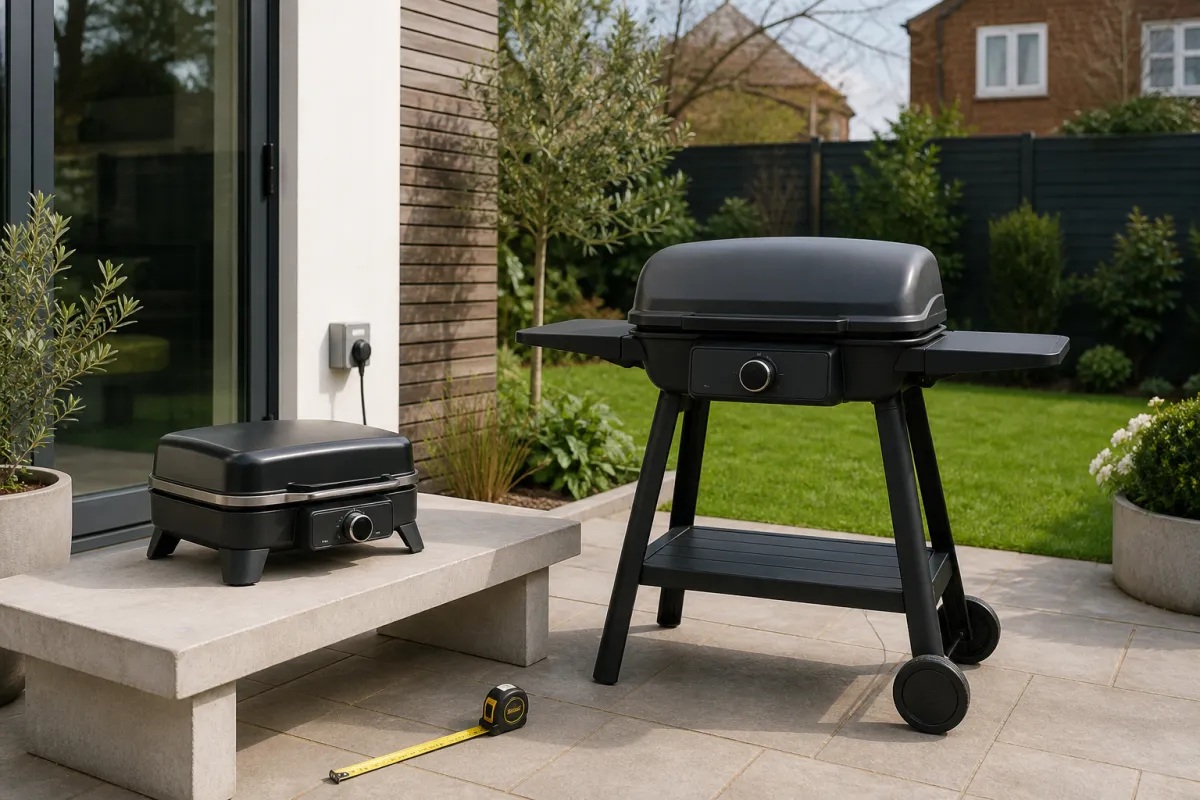
Electric heat avoids gas bottles and charcoal lighting, but it still needs a stable outdoor position, safe clearances and a suitable socket. Measure the route of the power lead as well as the grill. A cable across a doorway or busy patio is a practical problem even when the appliance itself fits.
Do not treat electric as permission to cook anywhere. Balcony, lease and building rules can still restrict outdoor cooking. Follow the exact manufacturer's instructions for weather, extension leads and clearance rather than applying advice from a different model.
Measure the assembled working footprint
Retail dimensions may describe the main body while ignoring an open lid, stand or unfolded shelves. Measure width, depth and height in the position you will actually cook, then check the route to storage. A grill that technically fits but has to be dismantled after every meal is unlikely to be used often.
| Format | Usually suits | Main compromise |
|---|---|---|
| Compact tabletop | Balconies, small patios and households cooking one batch | Less space for mixed food or larger gatherings |
| Tabletop XL or dual-zone | Families, different foods and longer probe-guided cooks | Heavier body and higher price |
| Full-size cart | Regular entertaining and permanent garden positions | Assembly, storage and difficult movement |
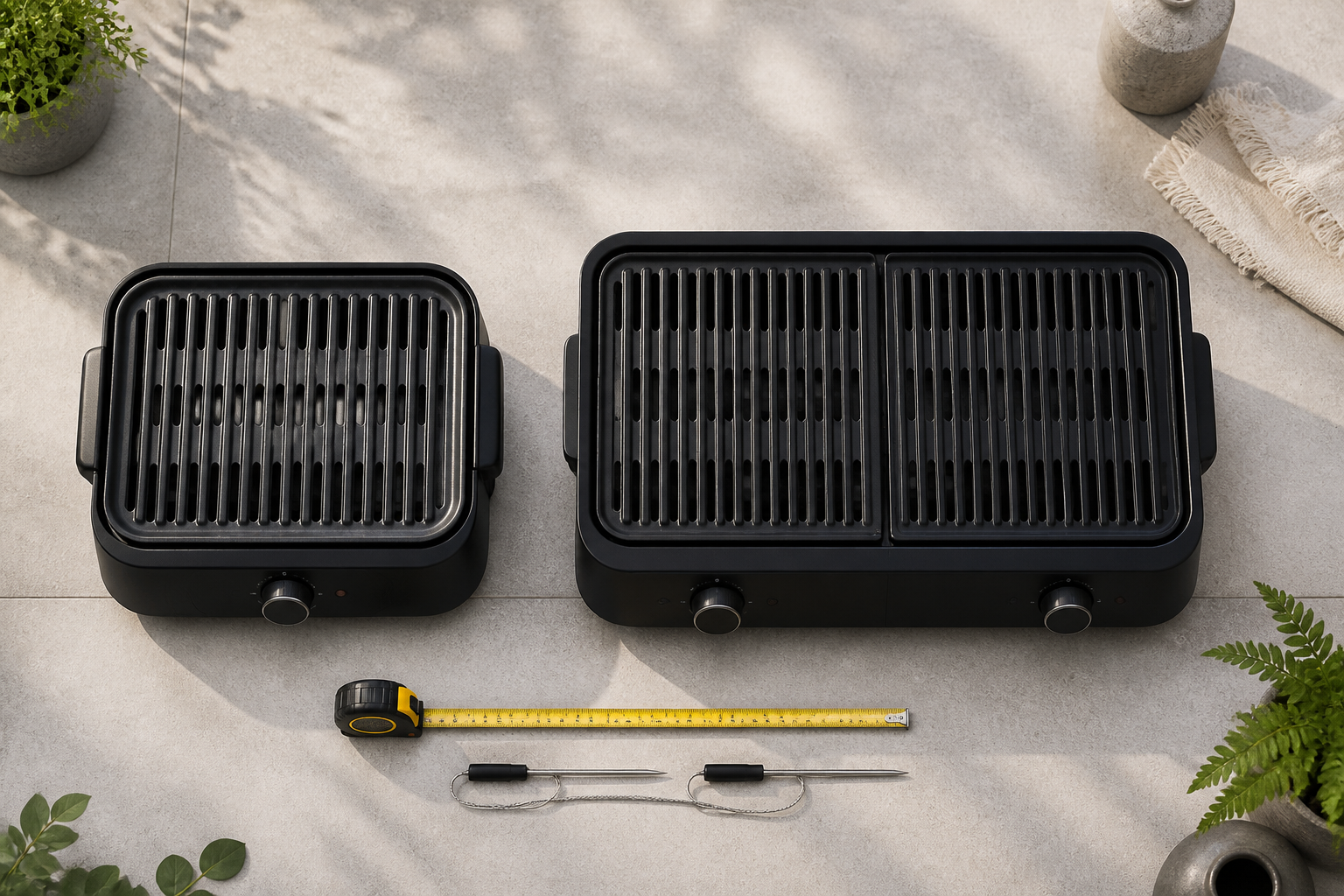 A larger or divided cooking surface is useful when foods need different temperatures or timings.
Translate capacity claims into meals
Claims such as eight burgers or 15 portions are useful orientation, not a guarantee. Burger sizes differ, and food needs gaps for turning and airflow. A stated cooking area is easier to compare, but the shape matters: a broad rectangle handles skewers and separate ingredients differently from a circular plate.
For mixed meals, ask whether everything can cook at one temperature. A single surface is fine when burgers, sausages and vegetables have similar timings. Two independent zones become useful when one food needs lower heat, later starting or a different finish.
Maximum temperature is only one part of performance
High heat helps preheating and searing, but an impressive maximum does not prove even cooking. Independent tests of several good grills still found cooler edge areas. Look for evidence about heat-up time, temperature control and results across the whole surface.
Wattage is electrical input rather than a quality score. A compact 2,200W grill and a large 3,000W grill are heating different areas. Use power to understand the appliance and electrical load, then judge cooking performance from the surface, controls and credible tests.
Decide how much smoke you actually want
An ordinary electric grill can brown and char food, but it does not create charcoal smoke by itself. Pellet-smoke systems burn a small amount of real wood while electricity remains the heat source. They can add a clear smoke note without a charcoal fire, but they also require compatible pellets, correct ignition and cleaning around the smoke box.
Do not pay for a smoker because it sounds more like a barbecue. Pay for it if you enjoy smoke flavour often enough to buy pellets and clean the extra parts.
Choose controls for the way you cook
Manual temperature controls are fast to understand and suit short cooks. Probes help judge internal temperature during chicken and larger cuts. App monitoring can reduce repeated lid opening, but it is useful only when you are willing to pair, monitor and maintain the connected feature.
Single control: simplest for one batch at one temperature.
Two zones: useful for meat and vegetables, or food with different finish times.
Probe-guided programmes: helpful for thicker food and longer cooks.
Remote app: convenient when you leave the grill during a monitored cook, unnecessary for quick burgers.
Check what the extra modes physically require
Air frying, steaming, roasting, smoking and keeping food warm can make an outdoor grill more useful. Check which basket, tray, probe or smoke accessory creates each mode and whether it is included. A feature that requires several separately purchased parts changes both price and storage.
Also check whether two modes can operate together. A split accessory surface can grill on one side and steam or warm on the other; a dual-zone machine may set different temperatures. A single-mode selector may offer many programmes but only one at a time.
Treat cleaning as part of cooking time
Electric grills avoid ash but still collect grease, food residue and smoke deposits. Look for removable grates or plates, an accessible drip tray and clear instructions around the heating element. Dishwasher-safe claims apply only to specified parts, not the electrical body or every removable component.
Self-cleaning is assistance rather than magic. Independent testing of one full-size model found that its cycle loosened residue but still needed manual finishing. Pellet smokers add a small smoke box that must also be emptied and cleaned.
Plan for British weather and storage
A model may tolerate outdoor cooking without being suitable for permanent exposure. Check whether a cover is recommended and whether controls, plugs or probes must be kept dry. Let the appliance cool fully before covering or moving it.
Weight affects this decision. A 12kg tabletop grill can be carried more readily than a 49–50kg cart, but even compact models need a safe grip and clear route. Integrated handles help only after the appliance is cool.
Work out the real price
Compare the grill, required stand, cover, probes, baskets and smoke accessories as one package. Pellet models also create a consumable cost. Guide prices help set expectations, but current retailer prices and stock should be checked immediately before buying.
Final checklist
Will the assembled grill, open lid and shelves fit with safe clearance?
Can the power cable reach a suitable outdoor socket without crossing a walkway?
Is the cooking surface large enough for your normal meal rather than an occasional party?
Do you need two temperatures at once, or will one well-controlled surface do?
Will you genuinely use smoke, probes, app control or extra cooking modes?
Can you clean the plates, drip tray, element area and smoke box after use?
Where will the cooled grill and accessories live between cooks?
Does the total price include the stand, cover and accessories you need?
If those answers point to a format rather than a brand, compare our best electric outdoor grills by capacity, cooking setup, price and practical trade-offs.
