In this article
Choose a basket air fryer if you want the quickest route to crisp chips, vegetables, chicken pieces and frozen food. Choose an oven-style air fryer if you want a door, shelves, flatter trays and a small-oven feel for toast, pizza, roasting and family meals.
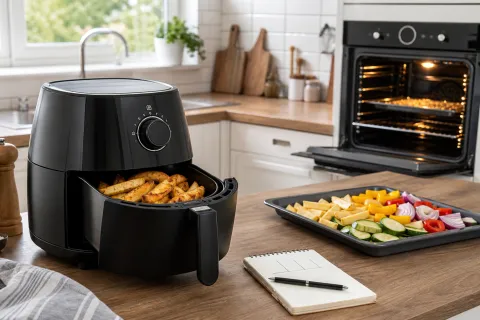
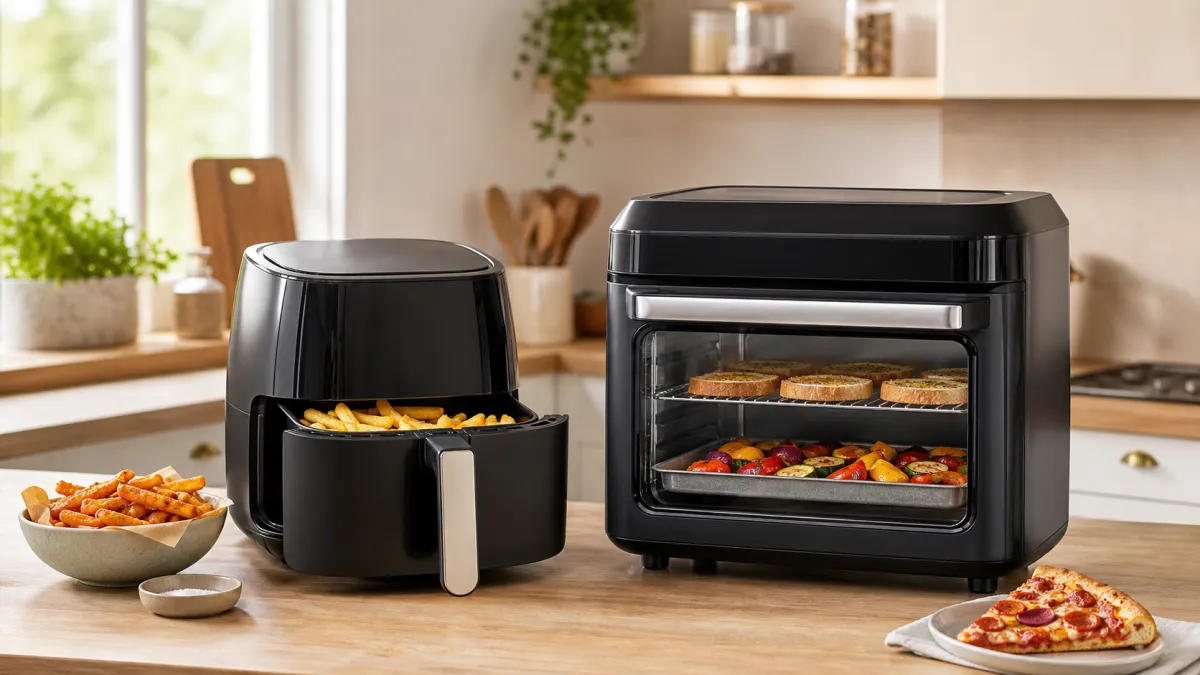
The names are not always tidy. A basket air fryer usually means a pull-out drawer or tub with a removable crisper plate. An oven-style air fryer is closer to a compact countertop oven: it has a front door, a cooking cavity and racks or trays. Both move hot air around food, but they feel different to use every day.
| What matters | Basket air fryer | Oven-style air fryer |
|---|---|---|
| Best everyday use | Fast, tossed food: chips, nuggets, vegetables, chicken pieces and reheated sides. | Tray and shelf cooking: toast, pizza, flatbreads, fish fillets, vegetables and small roasts. |
| Food movement | Easy to shake or toss mid-cook. | Better for food that should stay flat, but racks may need swapping or turning. |
| Visibility | You usually open the drawer to check progress. | The door lets you watch browning without pulling the food out. |
| Cleaning | Often simpler: drawer, crisper plate and any splatter points. | More parts: racks, trays, crumb tray, door glass and cavity corners. |
| Worktop fit | Usually deeper than it looks once the drawer is pulled out. | Often wider and heavier, with a hot door and more clearance to plan. |
If that table already settles the decision, start with our air fryer guide for drawer and basket models, or compare broader countertop cooking options in our mini oven guide. If you are still split, the next sections are where the decision usually becomes clear.
Basket air fryers are best when food benefits from tossing
A basket air fryer is strongest when the food can move around. Chips, wedges, frozen snacks, broccoli florets, chicken wings and small roasted vegetables all suit the shake-the-drawer routine. The crisper plate, which is the raised perforated plate inside many drawers, helps hot air reach more of the food rather than leaving it sitting flat on a tray.
The drawer also makes portion control simple. You can tip food in, shake it halfway through and lift the basket to serve. That is why basket models often feel faster and less fussy for weeknight meals, even when a large oven-style model technically has more shelf space.
Use the basket test: if you would happily shake the food in a bowl or tray, a basket air fryer is probably the neater format.
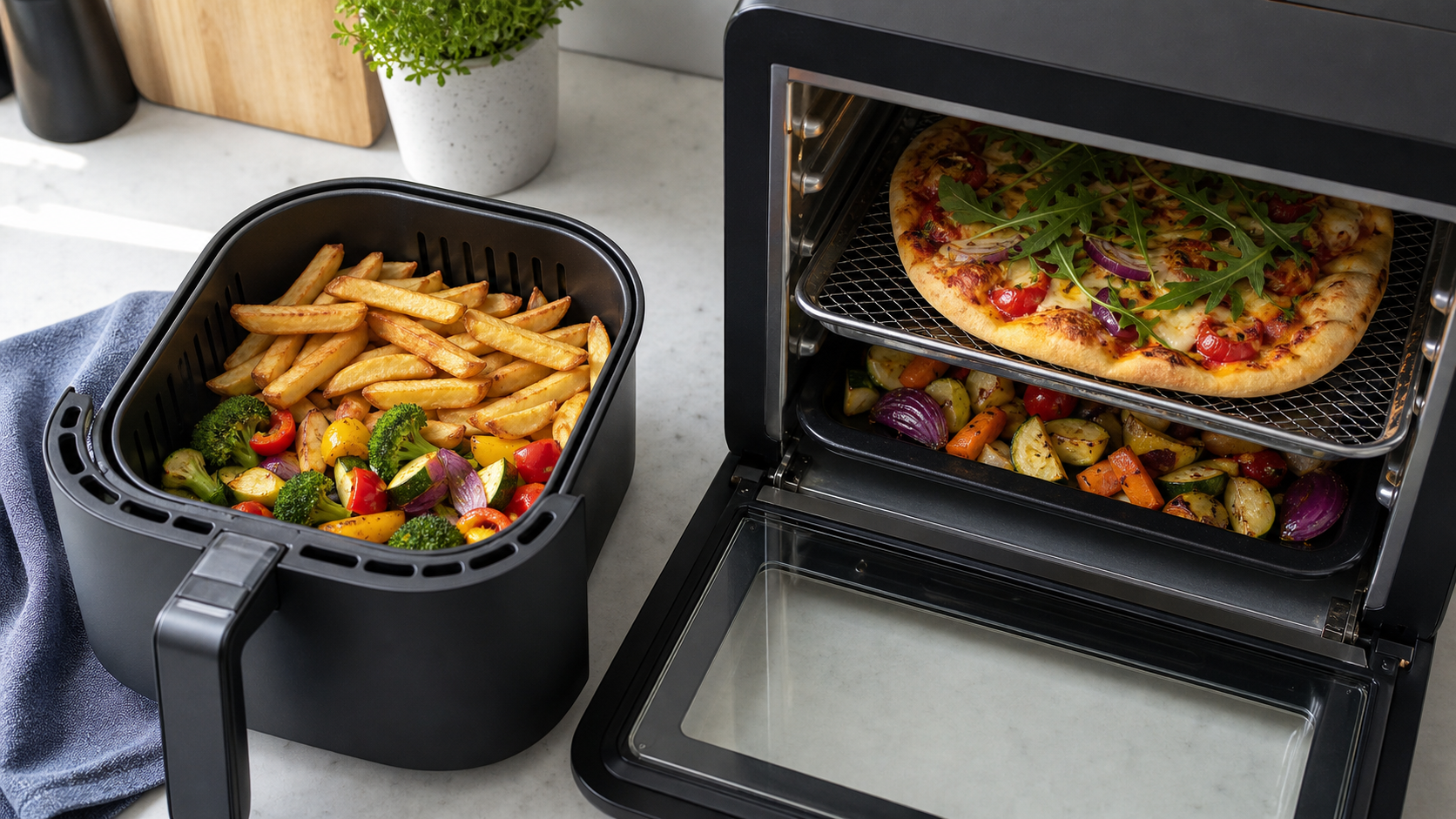 Basket drawers suit food you can shake; oven-style racks and trays suit flatter foods and multi-level cooking.
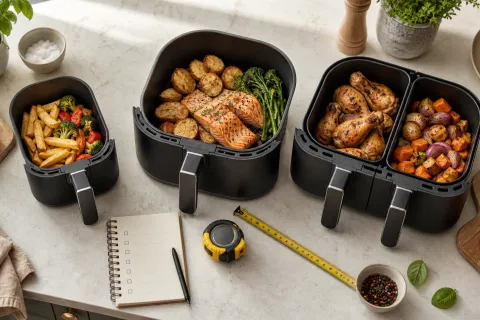
The drawback is shape. A deep drawer can be awkward for pizza, toast, delicate fish, open sandwiches or anything you want to keep in a single flat layer. Dual-zone models, which split cooking into two independently controlled drawers, can help with mixed meals, but they still behave like baskets rather than a small oven.
Oven-style air fryers suit flat food, racks and visibility
Oven-style air fryers are useful when the shape of the food matters as much as the crispness. A front door and shelves make it easier to cook flatter items, watch browning, use trays and spread food out. That can suit pizza slices, toast, fish, vegetables, pastries and small tray meals better than a deep drawer.
They also make more sense if you want one appliance to cover some mini-oven jobs. Many oven-style air fryers add bake, grill, toast, pizza or roast-style programmes. Those extra functions are only worth paying for if you will actually use them; if the appliance spends most of its life cooking chips and nuggets, the door and racks may become extra cleaning rather than extra value.
There is a practical trade-off. Multi-level cooking sounds efficient, but food on different shelves may brown differently. You may need to swap racks, turn food or accept that the top shelf cooks more aggressively than the lower shelf. That is not a deal-breaker, but it is more like managing a small oven than shaking a basket.
Family meals are not just about litres
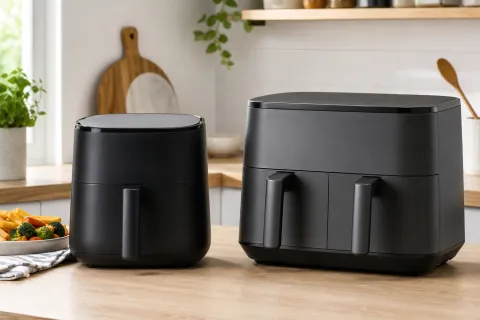
Capacity claims can be misleading because a basket and an oven-style cavity use space differently. A big drawer can hold a generous portion of chips, but it may still crowd food if you pile everything deep. An oven-style model can spread food across shelves, but those shelves may be narrower than a standard oven tray.
For one or two people: a basket air fryer is usually the simpler buy unless you specifically want toast, pizza or baking functions.
For families who cook mixed dinners: a large dual-drawer air fryer can be easier than an oven-style model if the meal is made from separate portions that can be shaken or stirred.
For flat meals and tray-style cooking: an oven-style air fryer can be more useful, especially if you are trying to reduce use of a full-size oven for small batches.
Measure the food you actually cook. If your repeat meal is chips plus chicken pieces, drawer capacity matters. If it is pizza, toast, fish fillets or a small tray bake, shelf width and usable tray size matter more.
Cleaning is where the easy choice often changes
Basket models look messier because the drawer catches crumbs and oil, but they are often quicker to clean. You usually deal with the drawer, crisper plate and any splashes around the heating area. Check whether the removable parts are dishwasher-safe, but remember that bulky drawers can take up a lot of dishwasher space.
Oven-style models spread mess around more surfaces. Racks, trays, crumb trays, door glass and back corners all need attention. Cheese, marinade and crumbs can also travel between shelves. If you like the idea of cooking pizza, toast and roasted vegetables in one appliance, factor in the cleaning after those foods, not just the neat product photo.
Grease matters for both formats. Keep removable parts clean, avoid blocking vents and do not store items on top of a hot appliance. The safest routine is simple: cool it, unplug it when cleaning, remove grease and crumbs, and follow the model instructions rather than guessing.
Worktop space and clearance can decide it
Do not judge either format by the footprint alone. A basket air fryer needs space in front for the drawer to pull out and somewhere heat-safe to put the basket if you remove it. An oven-style model needs room for the door to open, space around the body for heat and ventilation, and a safe route to the socket.
Oven-style models can be heavier and wider. That is fine if the appliance will live permanently on the worktop, but irritating if it has to move in and out of a cupboard. Basket models can also be awkward to store, yet their simpler shape usually makes them easier to tuck into a corner.
The best format is the one you can leave, open, clean and use safely. If either appliance would sit under a low wall cupboard, close to a sink, behind a kettle lead or beside piles of tea towels, rethink the position before buying.
When a mini oven is the better answer
Some shoppers say they want an oven-style air fryer when they really want a mini oven. The difference is not always sharp, because many countertop ovens now include an air-fry function. The useful question is whether air frying is the main job or just one of several small-oven jobs.
Choose the mini-oven route if you care about toast, baking, grilling, pizza, tray meals, door visibility and a more familiar oven layout. Choose a basket air fryer if crisping small portions is the main reason you are buying. If you already own a decent full-size oven and just want faster weeknight sides, a basket model is often less bulky and more direct.
For homes without a reliable main oven, a larger oven-style air fryer or mini oven can make sense. For homes with a good oven but no patience for preheating it for chips, the simpler basket appliance is usually the cleaner fit.
Buying checks before you choose
Check usable space, not only capacity. Look at drawer width, shelf width, tray size and whether food can sit in one layer.
Check the parts you will clean. Drawers and crisper plates are different from racks, trays, crumb trays and door glass.
Check how you monitor food. A viewing window is useful for browning, but it does not remove the need to turn or swap food.
Check the clearance. Plan for heat, ventilation, the open drawer or door, and a socket that is not overloaded.
Check the functions you will repeat. Do not pay for ten modes if you only use air fry and reheat.
If you are comparing product pages, read the included accessories carefully. A basket model may come with crisper plates; an oven-style model may include wire racks, trays, an air-fry basket and a crumb tray. Those parts tell you a lot about how the appliance expects to be used.
The format most homes should buy
For most buyers, the safer first choice is a basket air fryer. It is direct, quick, easier to shake, often easier to clean and better matched to the foods that make people want an air fryer in the first place.
Buy oven-style only when its shape solves a real problem: you want flatter cooking, visible browning, racks, toast, pizza, small tray meals or a compact oven substitute. In that case, compare it against mini ovens as well as air fryers, because the better appliance may be the one that behaves most like the oven you are trying to avoid using.
In short: basket for fast crisp food; oven-style for trays, racks and small-oven jobs. If you cannot name the oven-style jobs you will repeat, buy the basket model and keep the decision simple.
Sources and checks
These links help verify the format differences and safety checks behind the buying advice.
Ninja AF400UK drawer air fryer specifications*: useful for checking how a large drawer-style air fryer presents drawers, crisper plates, capacity, dimensions, wattage and cleaning claims.
Ninja DT200UK countertop oven specifications*: shows the oven-style route, including racks, trays, a glass door, air-fry mode and broader oven functions.
Electrical Safety First kitchen safety guidance: worth checking before positioning hot countertop appliances near sockets, cupboards, cables or clutter.